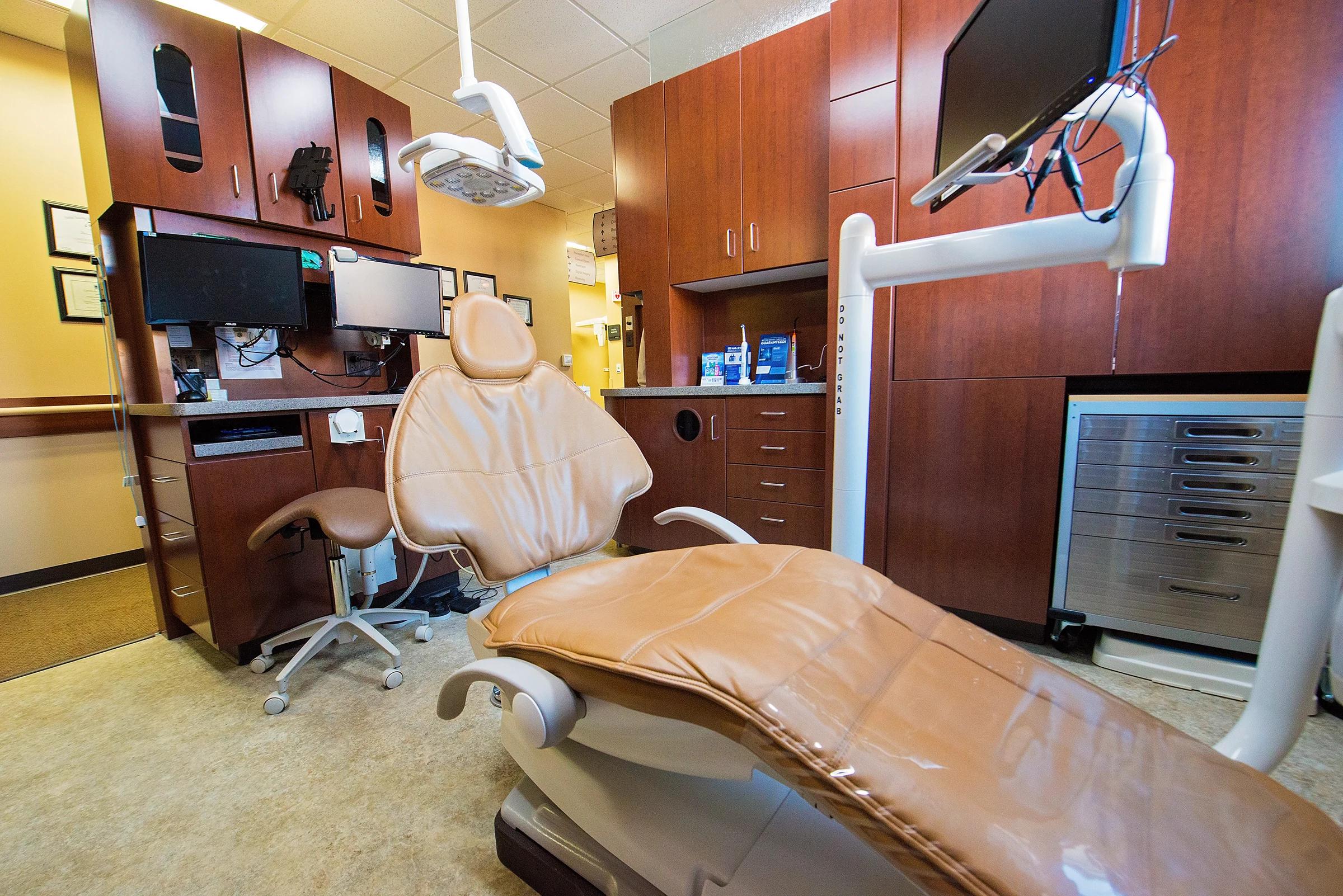
Tooth-Colored Fillings
A modern, single-visit fix for cavities — matched to your natural smile.
A Quiet, Modern Repair for the Most Common Dental Problem
Cavities are still the most common reason patients come in for treatment. The good news is the technology for treating them has come a long way. The composite fillings we place today bond directly to your tooth, match your natural color, and let us preserve more of the healthy structure than older silver fillings ever did.
If Dr. Carroll has recommended a filling, the goal is simple: clean out the decay, restore the tooth to its original shape and function, and get you on your way. Most fillings take less than an hour, and most patients leave wondering why they were nervous in the first place.
How Cavities Get Started
A cavity isn't something that just happens. It's the slow result of a process you're not aware of: bacteria in the plaque on your teeth produce acid every time you eat or drink something with sugar or starch. That acid wears away the enamel — the hard outer layer of your tooth — a tiny bit at a time. Eventually it breaks through, and the softer dentin underneath decays much faster.
We can usually catch decay early at your cleaning and exam — sometimes even before it's broken through to a real cavity, while it's still “reversible” with fluoride. The earlier we catch it, the smaller the filling needs to be. That's the whole reason for the six-month rhythm.
Signs You Might Have a Cavity
Cavities don't hurt at first. By the time you can feel them, they've usually been there a while. Watch for:
- Sensitivity to cold drinks, hot drinks, or sweet foods
- A sharp twinge of pain when you bite down on something
- A visible dark spot, a hole, or rough edge you can feel with your tongue
- Food consistently catching in the same spot
- A tooth that aches dully without an obvious cause
- Bad breath or a bad taste that doesn’t go away with brushing
None of these are guaranteed signs of a cavity, and you can absolutely have a cavity without any of them. That's why we screen at every visit. If you're feeling something that wasn't there before, don't wait it out — give us a call.
What to Expect During the Procedure
- 1Numbing. We start with a topical gel and then a slow, gentle injection so the area is fully numb before we do anything. You should feel pressure but no pain. Tell us right away if you don’t — we can always add more.
- 2Removing the decay. Dr. Carroll uses a small, high-speed handpiece to remove only the decayed portion of the tooth. He preserves as much healthy structure as possible. This is the part that makes the noise.
- 3Cleaning and preparing the tooth. We clean out the cavity completely, then etch the surface with a mild gel that helps the composite bond.
- 4Placing the composite. The tooth-colored resin goes in in thin layers, each one cured to a hard finish with a special blue light. This layered approach is what gives composite its strength.
- 5Shaping the bite. Dr. Carroll carves the new filling so it matches your tooth’s original shape, then has you bite down on a thin paper that marks any high spots. Adjustments take seconds.
- 6Polishing. A final polish makes the filling smooth so plaque has nothing to grab onto.
Start to finish, a single filling usually takes 30 to 60 minutes. Larger fillings, or several at once, can take longer. You'll be numb for a few hours afterward, so plan around eating until the feeling comes back.
When a Filling Isn't Enough
Most cavities can be fixed with a filling. There are a few situations where we'll recommend something more substantial:
- The decay is so deep it has reached the nerve — that’s usually a root canal followed by a crown
- The cavity has weakened the tooth so much that a filling alone wouldn’t hold up to chewing — a crown protects what’s left
- The decay has wrapped around a cusp or broken off a wall of the tooth — an inlay, onlay, or crown rebuilds it properly
If we recommend something larger than a filling, Dr. Carroll will show you the X-ray and explain exactly why. The conversation is always honest — we'd rather under-treat and watch a tooth than over-treat one that doesn't need it. See more on crowns and root canal therapy.
After Your Filling
A few common-sense things to know about the first day or two:
- Wait until the numbness wears off before you eat — usually two to four hours. It’s easy to bite your cheek or tongue when you can’t feel them.
- Some sensitivity to hot, cold, or pressure is normal for the first few days. It should fade.
- You can floss and brush normally right away. Composite is fully cured before you leave the chair.
- If your bite feels off when the numbness wears off — like the tooth hits first when you close — call us. A 30-second adjustment fixes it.
Keeping Fillings Lasting Longer
Brushing twice a day, flossing, and coming in twice a year is the whole formula. We check every filling at every cleaning. If one is showing wear, chipping, or has decay forming around the edge, we'd rather replace it on a planned visit than wait for it to fail at an inconvenient moment.
If you grind your teeth at night, ask us about a nightguard — grinding is one of the biggest reasons fillings (and natural teeth) wear out faster than they should.
Frequently Asked Questions
Do fillings hurt?
No. Dr. Carroll numbs the tooth fully before doing any work — most patients feel pressure and vibration, but no pain. If you're particularly anxious about needles or numbing, tell us before we start. There are gentle techniques (like topical numbing first, slow injection, and warmed anesthetic) that make the whole process easier.
How long do composite fillings last?
A well-placed composite filling typically lasts 7 to 12 years, sometimes longer with good home care and regular cleanings. Lifespan depends on the size and location of the filling, your bite, and habits like grinding. We check the condition of every filling at every cleaning visit so we can catch wear or chipping before it becomes a bigger problem.
Why composite instead of silver (amalgam) fillings?
Three reasons. First, composite matches your natural tooth color — silver fillings stand out, especially when you smile or laugh. Second, composite bonds to the tooth, which means we can preserve more healthy tooth structure when we prepare the cavity. Third, composite contains no mercury. We've used composite as our default for years and the results speak for themselves.
Will my tooth be sensitive after the filling?
Some sensitivity to cold or pressure for a few days is normal, especially for larger fillings. It usually settles within a week. If sensitivity gets worse instead of better, or if it lasts more than a couple of weeks, give us a call — sometimes a tiny bite adjustment is all it takes to settle things down.
Can you replace my old silver fillings?
Yes, and we do it regularly. There's no urgent medical reason to remove a silver filling that's still functioning, but if you're unhappy with how they look or one is showing wear, we can replace them with composite. We'll talk through the timing and cost so you can decide what makes sense.
How long does the appointment take?
Most fillings take 30 to 60 minutes, depending on size and how many we're doing. Larger or more complex restorations can take longer. We'll give you a time estimate when we schedule, so you know what to plan for.
If you've noticed any of the signs above, or it's just been a while since your last checkup, give us a call. Treating a small cavity now is always easier than treating a bigger one later.
Schedule a Visit
Suspect a cavity? An exam plus X-ray tells us exactly what we're dealing with. Most fillings can be done at the same visit if you'd like to combine them.
Book AppointmentCatch It Small
A small filling today is a small repair. A cavity ignored for a year often becomes a crown or root canal. Earlier is always cheaper and easier.
Related Services
Related Reading
Ready for a Healthier Smile?
Whether you're due for a cleaning or considering a smile makeover, we're here to help. Schedule your appointment today.
Call us for emergency care