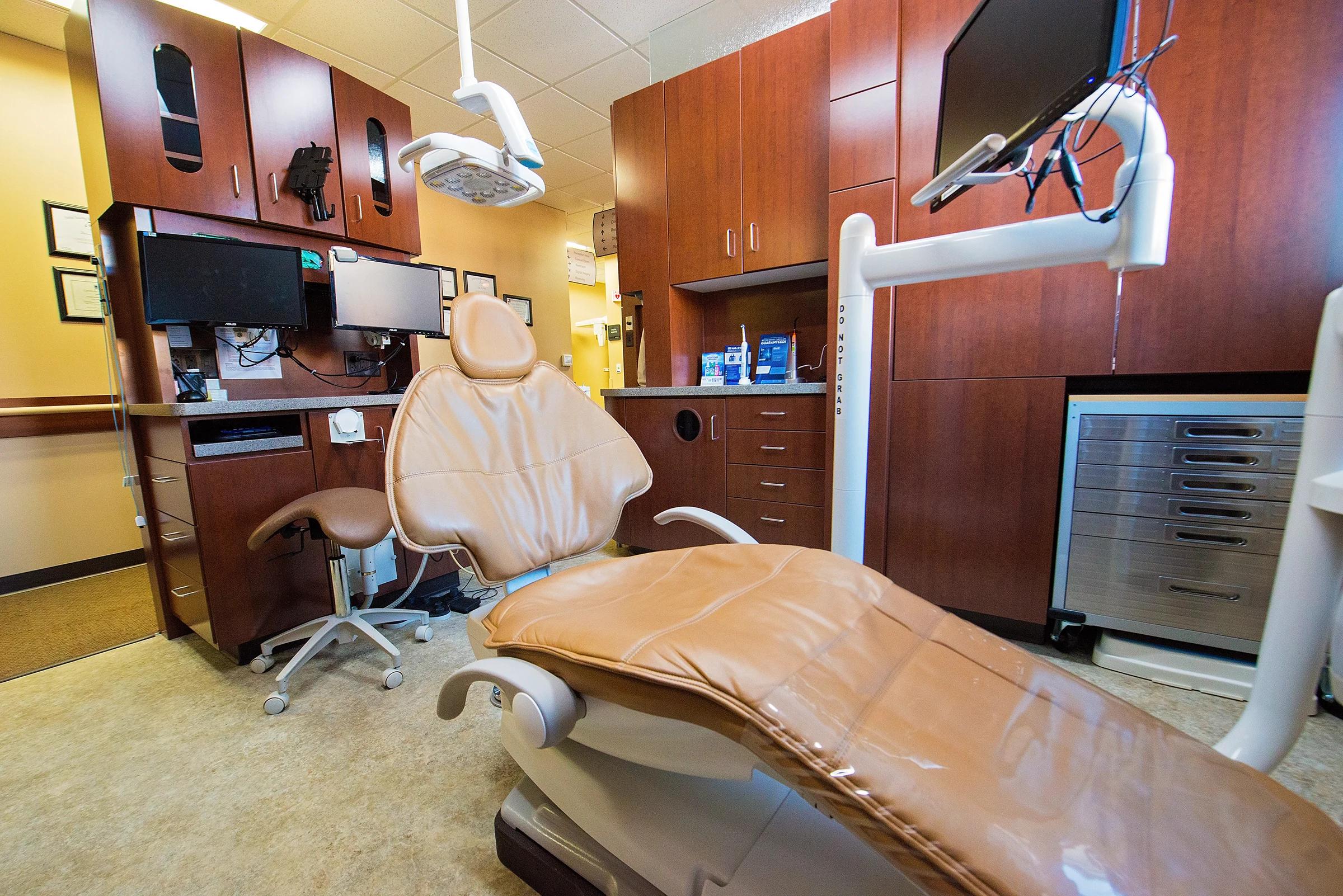
Cleanings & Exams
Twice-yearly visits that keep small problems from becoming big ones.
The Most Important Visit on Your Calendar
If there's one thing that does more for your teeth, gum health, and overall well-being than anything else we do here, it's the regular cleaning and exam. Two visits a year. About an hour each. The single best return on time you can give your mouth.
Most cavities, most cases of gum disease, most cracked or worn teeth — they don't announce themselves. They show up quietly, and by the time you can feel them, the fix is bigger than it needed to be. The reason we ask you back every six months isn't bureaucratic. It's because that's the rhythm that lets us catch the small stuff while it's still small.
What a Cleaning Actually Involves
Your hygienist — Jamie, Crystal, or Carrie — will take you back, gets you settled, and works through a careful sequence:
- 1A quick check-in. We ask about anything new — sensitivity, pain, changes in your medications, anything you want us to look at. We listen first.
- 2Plaque and tartar removal above and below the gum line. We use a combination of ultrasonic instruments (which use gentle vibrations and water) and hand scalers to clear deposits of plaque, tartar, endotoxins and stains the toothbrush can’t reach.
- 3Checking the space between the tooth and the gum. This is where we detect early gum problems, we work it carefully — you may feel a little pressure, but it shouldn’t hurt.
- 4Polishing. A gritty paste and a slow rotating cup smooth the tooth surfaces and lift surface stains. Your teeth will feel smooth when you run your tongue across them.
- 5Flossing. We floss every contact, even if you’re a daily flosser at home — it makes sure no polish or debris gets left behind.
- 6Fluoride, if it’s appropriate. A quick varnish strengthens enamel and helps reverse very early decay before it ever shows on an X-ray.
What's in a Comprehensive Exam
After your cleaning, Dr. Carroll comes in to look at the whole picture. A real exam is more than a glance at your teeth. It covers:
- A tooth-by-tooth check for new decay, worn spots, and any restorations that look like they’re wearing out
- An oral cancer screening of the tongue, cheeks, lips, palate, throat, and the soft tissue under the tongue
- A look at the jaw joints (TMJ) and the muscles of chewing — clicking, pain, or limited motion all matter
- Bite analysis — checking how your teeth come together and whether any teeth are wearing unevenly
- A check of any existing fillings, crowns, bridges, or implants for fit and function
- A look at the soft tissue under any partial dentures or appliances
If anything looks off, Dr. Carroll explains what he's seeing and walks you through what the options are. No pressure to decide on the spot. We'd rather you understand the situation than rush into a treatment plan.
X-rays: When We Take Them, When We Don't
We use a Schick digital X-ray system, which captures images on a small electronic sensor instead of film. Two practical benefits:
- Up to 90% less radiation than traditional film X-rays. A meaningful difference over a lifetime of dental visits.
- Sharper images we can magnify, adjust the contrast on, and even color-adjust to spot decay or fractures that would otherwise hide.
We don't take X-rays at every cleaning. We follow the ADA's guidelines on frequency, which depend on your age, your history of decay, and what we see clinically. For most healthy adults that's once a year. For kids whose adult teeth are coming in, more often. For someone with no recent dental concerns and a good baseline set on file, less often. Our standard is: only when the image will tell us something we need to know. More on what we use them for is on our digital X-rays page.
For Kids
Most kids start regular cleanings around their second birthday. The first few visits are short, friendly, and low-pressure — we count teeth, take a look around, maybe brush with the “tickle toothbrush,” and let your child get used to the room. The point isn't a clinical workup at age two. It's building familiarity so the dental office never feels like a place to be afraid of.
As your child gets older, we add the things they're ready for: fluoride, sealants on the back teeth as the molars come in, and X-rays only as the developing teeth need them. More on what to expect at each stage is on our Kids' Info page.
When We Recommend More Frequent Visits
Six months is the default. There are several reasons we might recommend a different rhythm:
- You’ve been treated for gum disease and are on a periodontal maintenance schedule (typically every 3 or 4 months for the first year)
- You’re a heavy tartar former — some people genuinely build deposits faster than the six-month interval can keep up with
- You’re managing a condition like diabetes that affects your gum health
- You wear orthodontic appliances or have areas that are hard to clean at home
- You’re pregnant — hormonal changes can inflame the gums, and an extra cleaning during pregnancy is often worthwhile
None of these are sales pitches. We're looking at what your mouth is actually doing and recommending the schedule that'll keep you in the best shape with the fewest interventions over time.
What We Send You Home With
A clean mouth, a fresh toothbrush, and — if there's anything to address — a clear picture of what we're recommending and why. If we found early decay, you'll know exactly which tooth and how big. If we noticed your gums could use more attention, we'll show you which areas and what to do differently at home. The goal is for you to walk out informed, not anxious.
Honest Word About Cost
We bill all insurance plans and our team handles the paperwork. If you don't have insurance, we'll quote you a straightforward price for the visit before you commit. No surprises, no upsells.
See our insurance page for what we accept and how we handle billing.
Frequently Asked Questions
How often should I come in for a cleaning?
Most adults and kids do best on a six-month schedule — that's the rhythm that catches small problems before they get big and keeps tartar from getting a foothold. If you're being treated for gum disease, or your gums tend to inflame easily, we may move you to every three or four months for a stretch. We tailor the schedule to what your mouth is actually doing, not a one-size-fits-all rule.
What's the difference between a cleaning and a deep cleaning?
A regular cleaning (called prophylaxis) handles plaque and tartar above the gum line and at the gumline itself. A deep cleaning — scaling and root planing — goes below the gum line, down the surface of the roots, where bacteria has been hiding and causing damage. Deep cleanings are a treatment for active gum disease, not a routine maintenance visit. We only recommend one when the screening shows you actually need it.
Do cleanings hurt?
For most people, no. There's some pressure and the usual cleaning sounds, but it shouldn't be painful. If your gums are inflamed or you have sensitive teeth, you may feel some tenderness — tell your hygienist and they'll adjust how they work. We'd rather you flag it than tough it out.
Will I need X-rays at every visit?
No. We follow the American Dental Association's guidelines and only take X-rays when they'd actually help us see something we couldn't otherwise — usually about once a year for healthy adults, more often for kids whose teeth are still developing or for anyone with active dental issues. Our digital system uses up to 90% less radiation than the old film X-rays, but the principle is the same: only when needed.
How long does a visit take?
A standard cleaning and exam runs about 45 minutes to an hour. New-patient visits and visits with X-rays take a little longer — usually 60 to 90 minutes. We respect your time and run on schedule; if we're running behind, we'll tell you.
My insurance only covers two cleanings a year — what if I need more?
Most plans cover two preventive visits per year. If we recommend a third or fourth visit because of periodontal maintenance, our front-desk team will help you understand what your plan covers and what it doesn't, so there are no surprises. We'd rather have an honest conversation up front than a confusing bill later.
Know Your Teeth
Hover over any tooth — or a name in the table — to see where it sits and when it typically comes in.
Permanent Teeth — When they come in
The first permanent molars typically show up around age 6 — often before the first baby tooth is lost. Hover any row or tooth below to link the two.
Upper Teeth
Lower Teeth
If it's been a while since your last cleaning — even years — there's no judgment here. The first step is just getting back on a schedule. Give us a call or book online and we'll get you in.
Schedule Your Cleaning
New patients welcome. Returning after a few years away is welcome too — no judgment, just a fresh start.
Book AppointmentTwice a Year, On Average
The single best return on time you can give your mouth. Two cleanings a year prevents most problems and catches the rest while they're small.
Ready for a Healthier Smile?
Whether you're due for a cleaning or considering a smile makeover, we're here to help. Schedule your appointment today.
Call us for emergency care