Dental X-Rays
Digital imaging that gives us — and you — a clear picture of what's really going on.
Modern X-Rays, Less Radiation, Better Results
A lot of dental problems are invisible to the naked eye. Cavities forming between teeth, infection at the root, bone loss from gum disease, impacted wisdom teeth — all of it happens out of sight. X-rays let us see what's really going on so we can catch issues early, when they're easier and cheaper to fix.
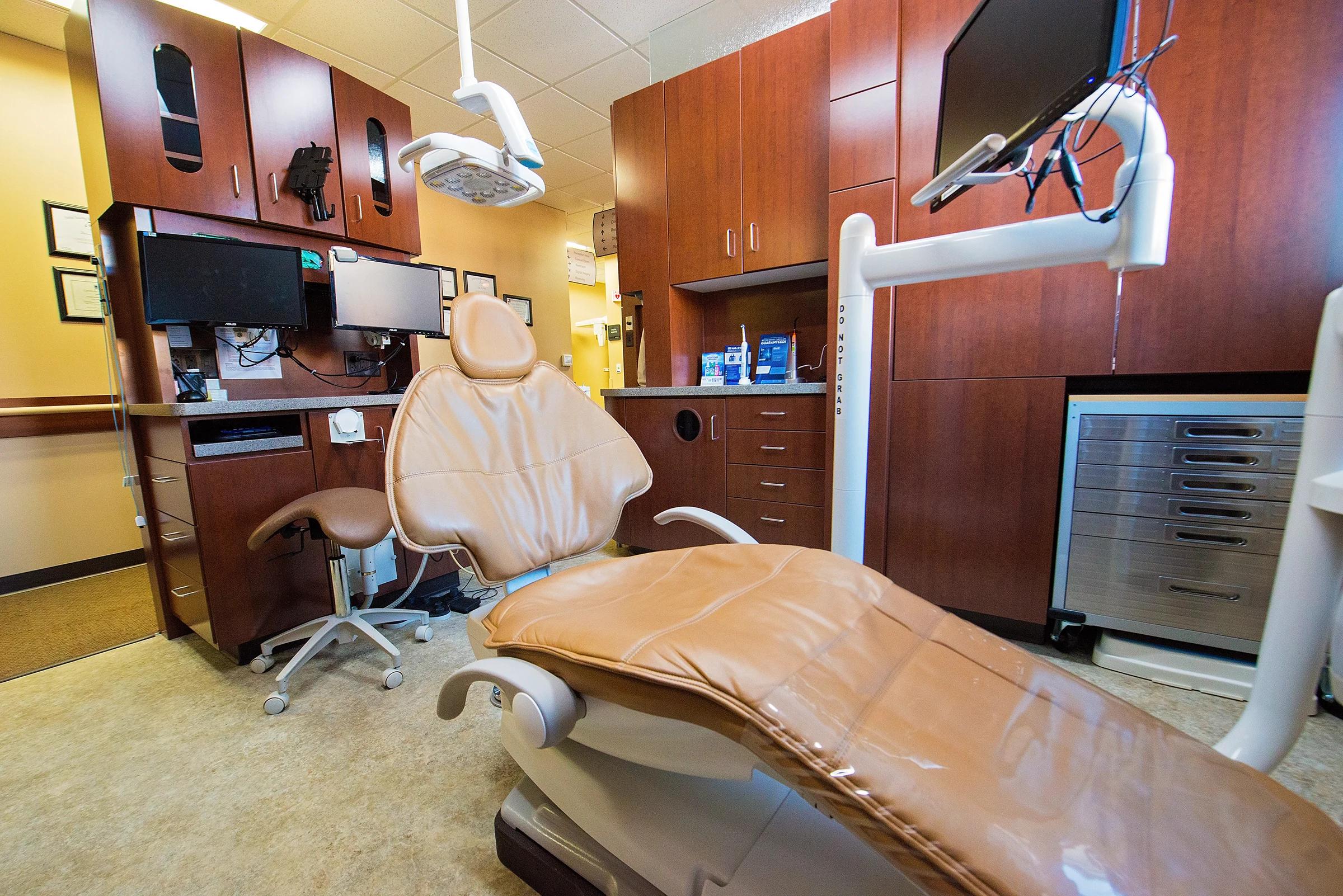
At River Street Dental, all of our x-rays are digital — no film, no chemicals, and up to 90% less radiation than traditional x-rays. Images appear instantly on the screen so we can review them with you right there in the chair.
The Different Types of X-Rays We Use
Different situations call for different views. Here's what we offer:
Digital Standard X-Rays (Bitewings & Periapicals)
These are the everyday x-rays you'll see at your routine cleaning visits. Bitewings show the crowns of your back teeth and help us spot cavities between teeth that aren't visible by eye. Periapical x-rays show an entire tooth — from crown to root — and are useful for checking root health, bone levels, and infection.
Digital Panoramic X-Rays
A panoramic x-ray gives us one big-picture view of your entire mouth — all of your teeth, your jaw bones, your TMJ joints, your sinuses, even your wisdom teeth. It's a single image taken with a machine that rotates around your head. Useful for checking overall jaw health, planning extractions, evaluating wisdom teeth, and getting a wide-angle look at things.
Cephalometric X-Rays
A cephalometric (or 'ceph') x-ray is a side view of your skull that shows how your teeth, jaws, and facial bones relate to each other. It's mostly used for orthodontic planning — like figuring out whether your child might need braces or how their jaw is developing. It helps us see the structural picture, not just the teeth.
For more advanced cases — like planning a dental implant or evaluating complex anatomy — we also offer 3D X-Rays (CT scans), which give us a complete three-dimensional view of your jaw and teeth.
Why Digital Is Better
The old film x-rays you might remember from years ago have been replaced almost everywhere by digital imaging — for good reason:
- Up to 90% less radiation than traditional film
- Instant images — no waiting for film to develop
- Higher resolution for better diagnosis
- We can zoom in, adjust contrast, and see fine details
- Easy to share between providers if you need a referral
- No chemicals — better for the environment
- You can see them with us on the monitor in the room
A Second Set of Eyes: AI-Assisted Review
Yes — we use AI tools to help us read the density values in your x-rays. Think of it as a second set of eyes alongside Dr. Carroll's: the software is trained to flag subtle changes in the tooth and bone that are easy to miss by eye, so we can catch things sooner. That helps us decide together whether something needs attention now or is simply an area worth keeping an eye on at your next visit.
The final call is always ours — the AI doesn't diagnose or treat anything. It just helps us see a little more, so the conversation we have with you is as clear and early as it can be. Read about the technology we use.
Safe and Routine
We get this question a lot: are dental x-rays safe? The short answer is yes. The amount of radiation from a routine dental x-ray is incredibly small — about the same as what you'd get from a few hours of sunshine. We only take x-rays when they'll genuinely help with diagnosis or treatment and we do have a lead apron available upon request.
We don't take x-rays just because we can. We take them because they tell us something we couldn't see otherwise.
Frequently Asked Questions
How often do I need dental x-rays?
It depends on your oral health, age, and risk factors. Most adults get bitewing x-rays once a year and a full set every 3 to 5 years. Kids typically need them more often as their teeth are still developing. Dr. Carroll will recommend a schedule that fits your specific situation.
Are digital x-rays safe?
Yes. Digital x-rays use up to 90% less radiation than the old film x-rays. The amount of radiation from a routine dental x-ray is about the same as what you'd get from a few hours in the sun. We also use protective lead aprons.
Why do I need x-rays if my teeth feel fine?
A lot of dental problems start without any pain or visible signs. X-rays let us see what's happening below the gum line, between teeth, and inside the tooth itself — places we can't see with a visual exam alone. Catching things early means smaller, easier, and less expensive treatment.
If you're due for a checkup or have specific concerns, give us a call. Our digital imaging is part of how we keep your smile — and the rest of you — healthy.
Schedule a Visit
X-rays are usually part of a regular checkup. Book a visit and we'll take care of it.
Book AppointmentThree Types Available
Standard (Bitewings)
Routine cavity detection
Panoramic
Wide view of full mouth
Cephalometric
For orthodontic planning
Related Services
Related Reading
Ready for a Healthier Smile?
Whether you're due for a cleaning or considering a smile makeover, we're here to help. Schedule your appointment today.
Call us for emergency care