Pediatric Dentistry
A calm room, a gentle pace, and a dental visit your kids actually look forward to.
The Goal: Kids Who Don't Mind Going to the Dentist
There's nothing quite like a kid's smile — and with a little care and regular visits, most of our patients grow up cavity-free. The goal of pediatric dentistry isn't just clean teeth. It's a child who walks out feeling like the dentist is no big deal, who keeps coming back through their teens, and who arrives at adulthood with the habits and the comfort to take care of their own teeth for life.
Dr. Carroll and the team see kids of all ages, from first visits at age one through the orthodontic-evaluation years and into the teenage stretch when wisdom teeth come up. We're patient, we go at the pace your child can handle, and we never push.
What a First Visit Looks Like
The first visit isn't a clinical workup. It's a chance for your child to see the room, meet the people, and decide it's a friendly place. Here's the run down:
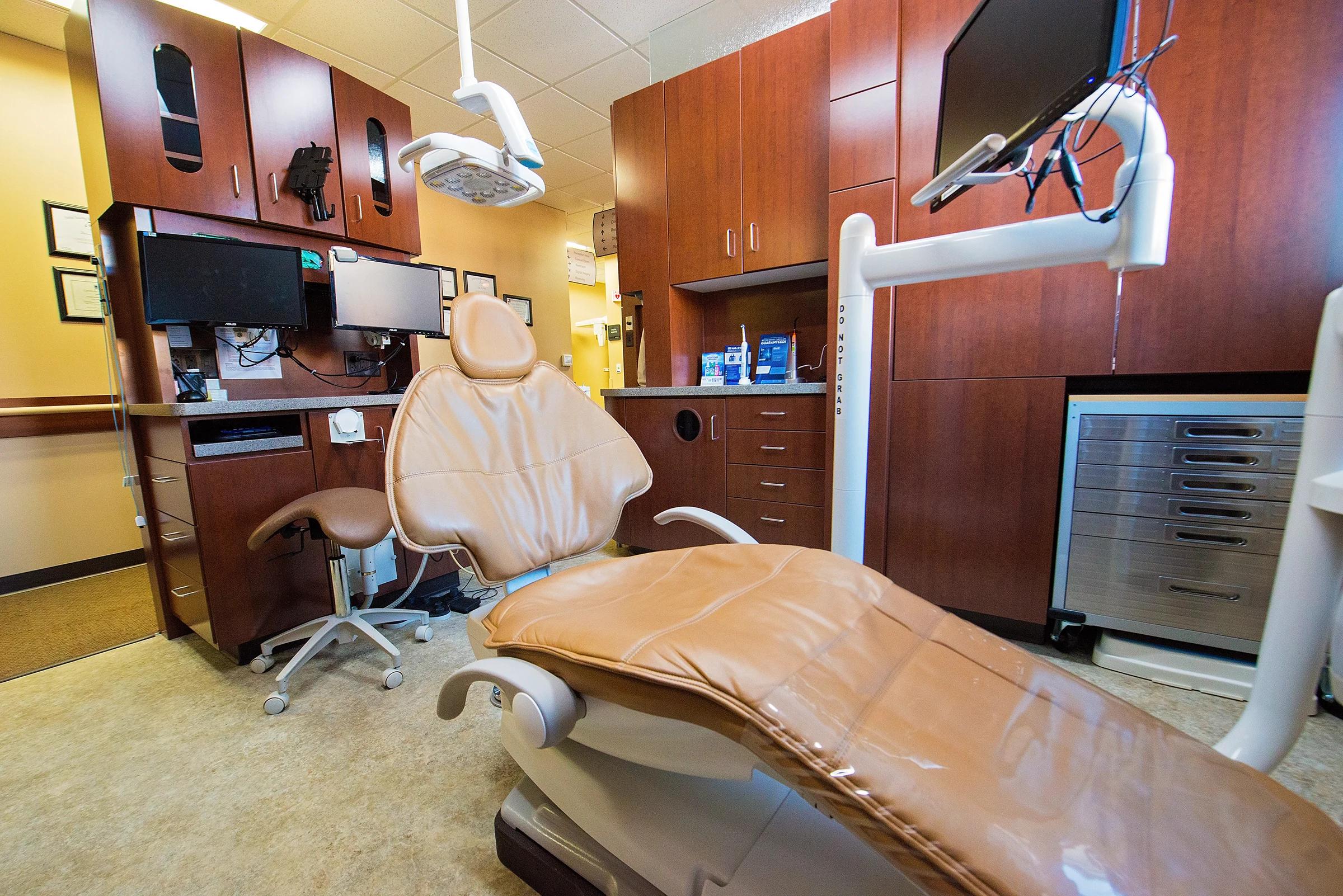
- 1A tour. We show your child the chair, the light, the “tooth counter,” the “water sprayer” and, of course, the toy chest. Everything has a kid-friendly name. The equipment turns out to be not scary once you can see what it does.
- 2Counting teeth. We use a small mirror and a little explorer to count and look at each tooth. If your child wants to count along, even better.
- 3A “tickle brush.” The polishing handpiece, with a soft cup, lets us clean the teeth without anything sharp going near them. Most kids love it.
- 4Fluoride varnish. A quick paint-on at the end. It tastes like fruit and stays on for a few hours.
- 5A high-five and a toy from the toy chest on the way out.
If your child isn't ready for some of this on the first visit, that's okay. We do what they're comfortable with and build from there. A short, positive first visit is worth far more than a complete one that ends in tears.
What We Look After at Every Stage
Toddlers (2–4).First visits, brushing technique, talking through bottle and sippy-cup habits. We watch for early signs of decay between baby teeth (where it loves to hide) and answer parents' questions about thumb sucking, pacifiers, and what's normal.
Early elementary (5–7).Baby teeth start coming out, adult teeth start coming in, and the first permanent molars arrive. This is the prime age for sealants on those new molars — they prevent cavities in the deep grooves where toothbrushes can't reach.
Late elementary (8–11).The mixed-dentition phase. We watch how the adult teeth are coming in, whether there's enough room for them, and whether an early orthodontic evaluation makes sense. Most kids in this range are ready to brush on their own — though parents still help with floss for a while.
Tweens and teens (12+). The remaining adult teeth come in. We watch for crowding, talk about Invisalign or braces if needed, and start the conversation about wisdom teeth as those years approach. This is also where mouthguards come up if your kid is in contact sports.
The Preventive Tools We Lean On
- Twice-yearly cleanings — the foundation. Most cavities can be prevented just by keeping the rhythm.
- Fluoride varnish — strengthens enamel and reverses very early decay. Quick, safe, and effective.
- Sealants on the permanent molars — the single most effective cavity-prevention tool we have for kids. Painless, sealed in minutes per tooth, last 5–10 years.
- Digital X-rays only when needed — to watch how adult teeth are developing or to check for cavities between teeth that we can’t see.
- Honest conversation about diet — frequency of snacking matters more than the snacks themselves. We talk about it without lecturing.
- A first orthodontic evaluation around age seven if there’s any sign the bite needs early attention.
For Anxious Kids (and Anxious Parents)
A few things that help, in our experience:
- Don’t over-prepare. Long, detailed warnings about what’s going to happen tend to raise anxiety more than they relieve it. We’re going to count your teeth; works better than a 20-minute briefing.
- Avoid words like hurt, shot, or pain. Instead use reassurance.
- Bring a comfort object if your child wants one. Stuffed animals are welcome in the chair.
- You’re welcome to stay in the room. Some kids do better with a parent right there; some do better when the parent steps out and lets them have their own experience. You know your child best.
- Nitrous oxide is available for kids who need extra help relaxing. It wears off completely by the end of the visit.
More for Parents
We've put together a kids' info page that covers the everyday stuff — when to start brushing, how much toothpaste, what to do about thumb sucking, how to make brushing less of a battle, and what to expect at each age.
See the Kids' Info page for the full overview, plus our patient-education articles on caring for your child's smile, teething, and fluoride.
Frequently Asked Questions
When should my child first see a dentist?
The American Dental Association recommends a first dental visit by age one, or within six months of the first tooth coming in — and that's our recommendation too. These early visits are a great chance to chat about teething, brushing, and bottle habits, and to let your child get familiar with the office in a no-pressure way.
What if my child is nervous or scared?
That's normal — and we're set up for it. We go slow, we let your child watch and ask questions, we use kid-friendly language for everything, and we don't push when they're not ready. We'd rather have a short, positive first visit and build from there than try to do everything at once and make the dentist feel scary. You're welcome to be in the room the whole time.
Do you do fluoride and sealants for kids?
Yes, both. Fluoride varnish strengthens enamel and helps reverse very early decay — it goes on at the end of a cleaning and takes seconds. Sealants are a thin coating we paint into the deep grooves of the back teeth as the molars come in. They're one of the most effective things we do to prevent cavities in kids, and they don't require any drilling or numbing.
How often should my child come in?
Twice a year for most kids, just like adults. The six-month rhythm catches small problems early, lets us watch how the adult teeth are coming in, and reinforces the routine that builds lifelong habits. If your child is at higher risk for cavities, we may recommend more frequent visits for a stretch.
When does my child need their first X-rays?
There's no fixed age — it depends on what we can see clinically and what the developing teeth need. We follow the ADA's guidelines and only take X-rays when they'd actually help us see something. Our digital system uses up to 90% less radiation than the old film systems, but the principle is the same: only when needed.
Do you offer pediatric orthodontic evaluations?
Yes. The American Association of Orthodontists recommends a first orthodontic evaluation by age seven. That's not when most kids need treatment — it's when we can spot whether their bite is developing in a way that might benefit from early intervention. See our early interceptive orthodontics page for what that looks like.
Whether your little one is in for a first visit or your teenager is overdue, we'd love to see you. Give us a call or book online and we'll find a time that works.
Schedule Your Child's Visit
First-time visit, return visit, or somewhere in between — we'll match the appointment to your child's comfort level.
Book AppointmentStart Around Age One
Early visits build familiarity. We keep them short, friendly, and low-pressure — the goal is for the dentist to never feel scary in the first place.
Ready for a Healthier Smile?
Whether you're due for a cleaning or considering a smile makeover, we're here to help. Schedule your appointment today.
Call us for emergency care